
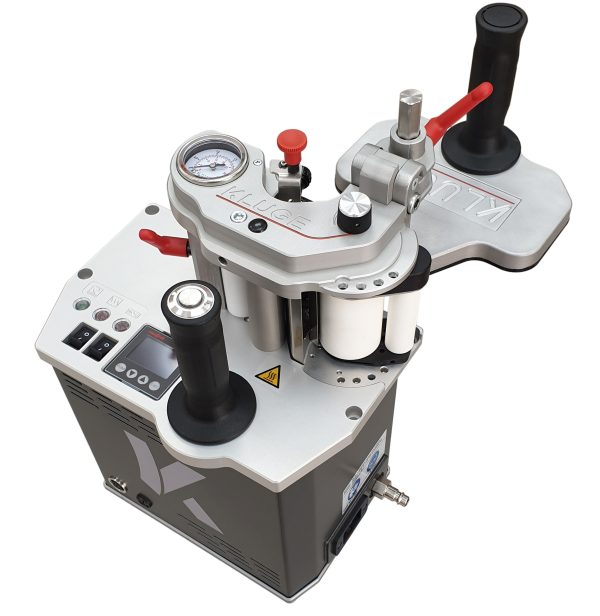
Laser edge banding has transformed the way modern workshops achieve seamless, high-end finishes, and hot air edgebanding technology is now leading that shift across Australia. Unlike traditional glue-based systems, a laser edge bander or fusion edgebanding machine activates the functional layer of the edging itself, creating a true optical zero joint with no visible glue line. Compact, versatile, and capable of handling straight panels, curved components, bevelled edges, and complex shapes, these machines deliver premium results without the footprint or cost of large industrial equipment. For cabinet makers and joinery businesses looking to step up finish quality, compact laser edgebanding machines offer a practical, high-performance solution that fits seamlessly into modern workflows.
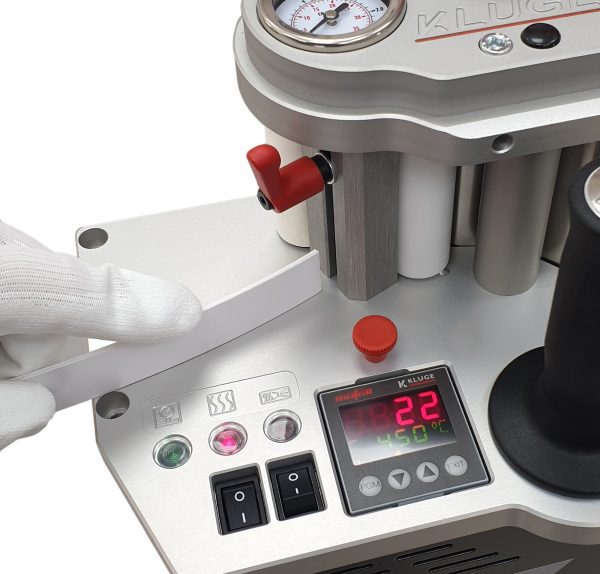
Zero joint edgebanding without glue, mess, or compromise. The HIT-M uses advanced hot air injection technology to activate functional layers on laser edges, delivering a true optical zero joint finish comparable to large industrial laser edgebanders — all in a compact, workshop-friendly solution.
Designed for modern joinery and cabinetry, it processes laser edges, fusion edging, and traditional EVA edges with ease, eliminating glue lines and reducing maintenance while maintaining premium finish quality across every job.
Edge capability: Straight, bevelled, curved, round panels and moulded parts | Angle processing: Up to 55°
Max edge height: 65 mm | Feed rate: 1 – 5.5 m/min (infinitely variable)
Hot air system: Up to 520°C with precise control for consistent bonding
Pressure system: 2 motor-driven rollers + 1 swivel (90°) driven roller for internal bonding
Automatic operation: Edge feeder with detection and stop function
Smart functionality: Auto heat on lift, standby when placed down, < 30 sec heat-up time
Power: 230V AC | 3.05 kW | 13.3 A | Air requirement: 6–10 bar
CNC capable and compatible with corner table setups for compact stationary use
Made in Germany for precision engineering and long-term reliability
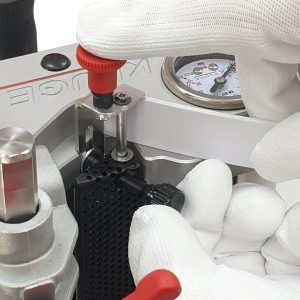
A laser edgebander and a hot air edge bander are both designed to produce a seamless, glue-free finish commonly referred to as a zero joint. The main difference is the method used to activate the functional layer on the edging.
Laser edgebanders are typically large production machines built for high-volume manufacturing. A hot air edge bander, such as the HIT-M, uses controlled hot air up to 520°C to activate laser-style edging tapes and create a comparable optical zero joint finish.
Fusion edgebanding uses a functional polymer layer that is already applied to the edging tape. Instead of adding glue through a traditional glue pot system, the functional layer is activated by heat and bonded directly to the board edge.
This is different from conventional EVA or PUR glue systems, which rely on separate adhesive application. By removing that step, fusion edgebanding can simplify operation and reduce cleanup requirements.
The HIT-M uses hot air technology to activate compatible functional layers, making fusion edgebanding a realistic option for smaller and medium-sized workshops.
Traditional laser edgebanding machines are often designed for large-scale manufacturing lines, with the space, infrastructure and investment that comes with them. That makes them an excellent fit for some factories, but not always for smaller workshops.
That is where newer compact solutions come in. Machines in this category are built to deliver premium edgebanding results while remaining practical for everyday joinery and cabinetry work.
The HIT-M sits within this space, offering a more accessible path to zero joint processing for workshops wanting the finish quality associated with compact laser edgebanding machines without the scale of a large industrial system.
A laser edgebander activates the functional polymer layer on compatible edging tape using heat energy, allowing the edge to bond directly to the board without a visible glue line. This creates the seamless finish often referred to as a zero joint. Workshops comparing different edgebanders often look at this technology when finish quality is a priority.
A laser edgebander uses laser energy to activate the functional layer on the edging, while a hot air edge bander uses controlled heated air to achieve a similar result. Both systems are designed to create an optical zero joint finish, but hot air systems offer a more compact and flexible solution for many workshops.
Fusion edgebanding uses edging material with a pre-applied functional layer that is activated by heat rather than a separate glue system. It is used to reduce visible glue lines, minimise maintenance, and produce a cleaner finish on cabinetry, joinery, and commercial panel work.
These machines can process laser edges, co-extruded and post-coated edging, functional-layer edging tapes, and traditional EVA edges. They are suitable for straight panels, curved components, bevelled edges, round workpieces, and moulded parts. When paired with CNC wood routers or CNC drilling machines, they can form part of a highly efficient production workflow.
Modern compact laser edgebanding machines and hot air systems are designed to deliver a comparable optical zero joint finish to larger industrial equipment. The key differences are typically production speed, automation level, and throughput rather than finish quality.
Zero joint edgebanding eliminates visible glue lines, improves edge appearance, reduces maintenance, and provides a more consistent finish. It is widely used in kitchens, wardrobes, shopfitting, and high-end joinery where presentation is important.
Yes. A hot air edge bander is well suited to small and medium workshops wanting zero joint capability without investing in large industrial machinery. It can also complement equipment such as contour edgebanders and panel return systems.
Capacity depends on the machine, but systems like the HIT-M are designed to handle straight, curved, bevelled, and moulded components, as well as angled edges. This makes them suitable for a wide range of custom joinery and cabinetry applications.
No. Hot air edgebanding activates the functional layer already applied to the edging tape, removing the need for glue pots, adhesives, and ongoing cleaning associated with traditional edgebanding systems.
Yes. Tuckwell Machinery supplies, services, and supports all machinery Australia-wide. This includes a full range of equipment such as panel saws, acoustic panel cutting machines, thicknessers, surface planers, and dust collectors.