Deburring & Edge Treatment
Remove burrs from flat sheet-metal parts, stampings, hardware and cut components before assembly, coating or further finishing.

MTS metal sanding and deburring machines are built for surface sanding, deburring, polishing, brushing and finishing flat metal plates and components, with wet or dry configurations available for production workshops.
The MTS series combines broad engineering capability with configurable sanding and brushing options for stainless steel, aluminium, aluminium alloy, titanium, laminated steel, iron, copper and other metal plate. It can also process hardware, stampings, castings and sheet-metal parts requiring flat sanding, rust removal, deburring or the removal of welding and surface marks.
For manufacturers looking for a production sander for metal, the MTS range provides 600 mm, 900 mm and 1300 mm working widths, with double, triple and four-roller configurations. Wet and dry versions, inverter-controlled feed and sanding speed, roller conveyors and specialised brush options can be considered according to the application.
The machine can be configured for several stages of flat metal preparation and finishing. The result depends on the sanding-head arrangement, abrasive selection, brush type and process settings chosen for the material.
Remove burrs from flat sheet-metal parts, stampings, hardware and cut components before assembly, coating or further finishing.
Sand and grind flat metal plates to remove surface marks, prepare material for later processes or create a more consistent face.
Produce polished, drawn, satin, No. 3, No. 4 or hairline-style finishes where the selected abrasive and brush configuration suits the material.
Remove rust, weld marks and other surface imperfections from suitable flat metal parts as part of a controlled finishing process.
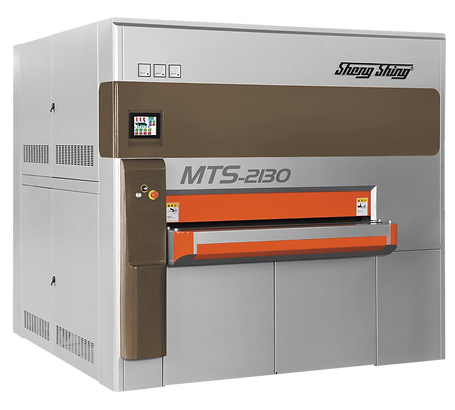
The MTS is intended for flat metal processing rather than pipe, gear, vibratory or robotic deburring. A conveyor moves the workpiece through the selected sanding and brush units, making it suitable for repeatable production work on panels and finished flat components.
The MTS range can be configured around working width, the number of sanding heads and whether the process is wet or dry. Final selection should be based on the material, finish and throughput required.
Choose the machine width around the maximum panel or component size being processed.
Multiple roller arrangements allow the machine to be configured for different sanding and finishing sequences.
Optional equipment can be selected according to the sanding application and workshop process.
The following functions and options are drawn from the supplied manufacturer information. Exact configuration should be confirmed for the machine being quoted.
| Area | Standard Feature or Available Option | Purpose |
|---|---|---|
| Controls | Digital readout control panel | Provides operators with machine information and adjustment access. |
| Feed | Variable feed motor | Allows the workpiece feed to be matched more closely to the material and finish. |
| Main motor | Disc brakes and load meter | Supports controlled stopping and allows the operator to monitor motor loading. |
| Sanding belt | Conveyor tracking and quick-release belt system | Supports belt alignment, maintenance and faster belt changes. |
| Elevation | Four lifting poles | Supports stable machine-height adjustment. |
| Optional controls | Frequency inverter for feed and sanding speed | Allows adjustable speeds for different metal types and finishing processes. |
| Optional wet system | Water tank devices and circulation system | Supports wet sanding and helps clean the panel surface during processing. |
The MTS incorporates monitoring and emergency-stop functions intended to protect the operator and machine when the sanding belt or air supply is not operating correctly.
Limit switches are fitted on both sides of the sanding belt to help prevent it running away from the correct track.
The machine is designed to stop when there is no air supply, no sanding belt fitted or the sanding belt becomes loose.
If the sanding belt breaks during operation, the machine is designed to brake immediately to protect the operator and equipment.
An infeed emergency brake, emergency stop bar and emergency stop button provide accessible ways for the operator to stop the machine.
MTS machines can be configured for wet or dry processing. The correct system depends on the material, required finish, heat generated during sanding and the workshop's extraction or water-management requirements.
Dry configurations suit many general sanding, deburring and brushing processes. Appropriate extraction and housekeeping should be planned around the metal and abrasive being used.
Wet configurations can be supplied with a circulation system and water tank devices at the infeed and outfeed to support the process and help keep the panel surface clean.
Brush selection influences the deburring, cleaning and surface-finishing result. The supplied MTS information lists the following brush types.
See how a conveyor-fed metal sander can process flat workpieces through a controlled sanding and finishing sequence.
The exact heads, brushes and process settings used will depend on the machine configuration and the required finish.
Answer a few practical questions and the Tuckwell team can help identify a working width, sanding-head arrangement and wet or dry configuration suited to your process.
Tuckwell Machinery supports Australian manufacturers with practical machine selection, installation, training and after-sales assistance.
Recommendations based on the metals, parts, surface result and throughput your business requires.
Support comparing widths, sanding-head arrangements, brush types and wet or dry systems.
Delivery coordination, installation, commissioning and operator training for machinery supplied by Tuckwell.
Technician-backed servicing, technical assistance and support sourcing parts and consumables.
Tell us what materials you process, the part sizes involved and the finish you need. Our team can help identify an MTS configuration suited to your production.
Answers to common questions about industrial metal sanding, sheet-metal deburring and production finishing.
A metal deburring machine removes raised burrs and sharp remnants left after cutting, punching, stamping or fabrication. The MTS is a conveyor-fed machine for flat metal panels and components and can be configured with sanding and brush units for deburring and surface finishing.
The supplier lists stainless steel, aluminium, aluminium alloy, titanium, laminated steel, iron and copper. Final abrasive, brush and machine settings should be selected around the particular material and required finish.
Yes. It is intended for flat metal plate and sheet-metal parts, including hardware, stampings, castings and fabricated flat components. It is not a pipe, gear, vibratory or robotic deburring machine.
Yes. Depending on the selected heads, abrasives and brushes, the MTS can be used for surface grinding, polishing, drawing and brushed finishes, including satin, No. 3, No. 4 and hairline-style finishes where the process is appropriate.
The MTS range is available in 600 mm, 900 mm and 1300 mm working widths. The correct size depends on the maximum panel or component width that needs to pass through the machine.
The right choice depends on the metal, abrasive process, heat generated, required finish and workshop setup. Wet systems can be supplied with water tanks and circulation, while dry systems require suitable extraction and housekeeping for the application.
The best sander for metal is the one configured around the material, workpiece size, desired finish and output. Working width, number of sanding units, brush selection, feed control and wet or dry processing should all be considered before choosing a machine.
Yes. Tuckwell Machinery supplies equipment Australia-wide and can assist with delivery coordination, installation, commissioning, operator training, servicing and technical support. Contact the team to discuss your requirements.
Explore complementary machinery for cutting, routing, machining, measuring and workshop extraction.