Cleaner Edge Appearance
The functional layer is activated directly, helping minimise the visible bond line between board and edging.

A laser edgebander is designed to create a premium zero-joint finish by activating the functional layer of compatible edging material, reducing the visible bond line between the panel and edge.
Tuckwell Machinery supplies zero-joint solutions for cabinet makers, joiners and furniture manufacturers looking for a cleaner finished edge. A laser edgebander uses energy to activate a functional polymer layer already applied to compatible edging material, creating a bond with little to no visible glue line.
For workshops that want this style of finish without installing a large industrial laser system, Tuckwell also supplies the HIT-M hot-air zero-joint system. The HIT-M is not a laser machine; it uses controlled heated air to activate compatible functional-layer edging and achieve a similar optical zero-joint result.
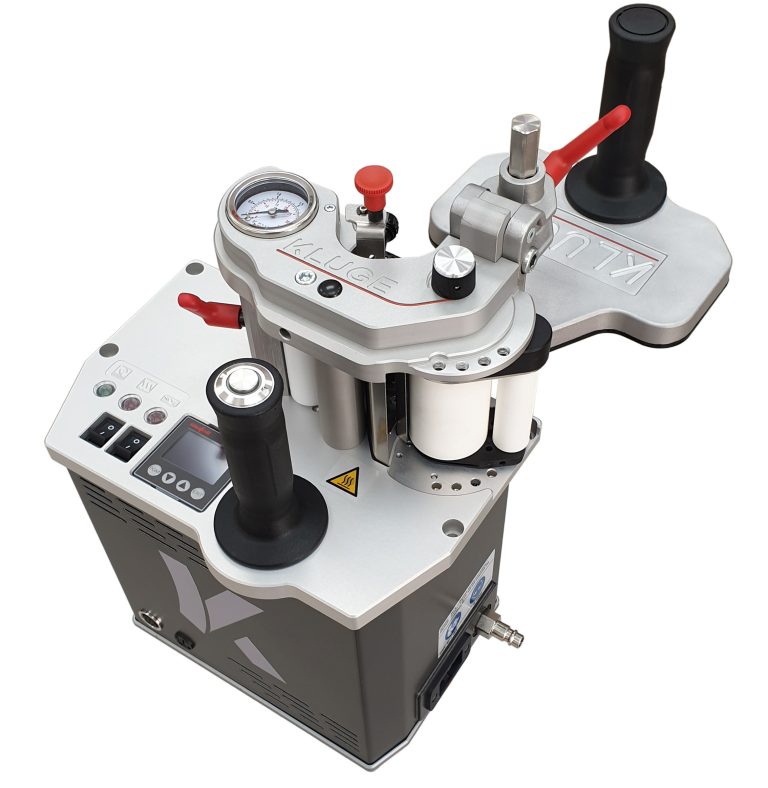
A laser edgebander activates the functional layer on specially designed edging material so it can bond directly to the board edge. Because there is no conventional glue line between the two surfaces, the finished edge appears cleaner and more seamless.
This type of technology is particularly attractive for premium kitchens, cabinetry, furniture and commercial joinery where edge quality is highly visible.
The HIT-M uses hot-air injection rather than laser energy. It is designed for workshops that want a zero-joint finish from compatible edging material in a compact format without the footprint and investment associated with a large industrial laser system.
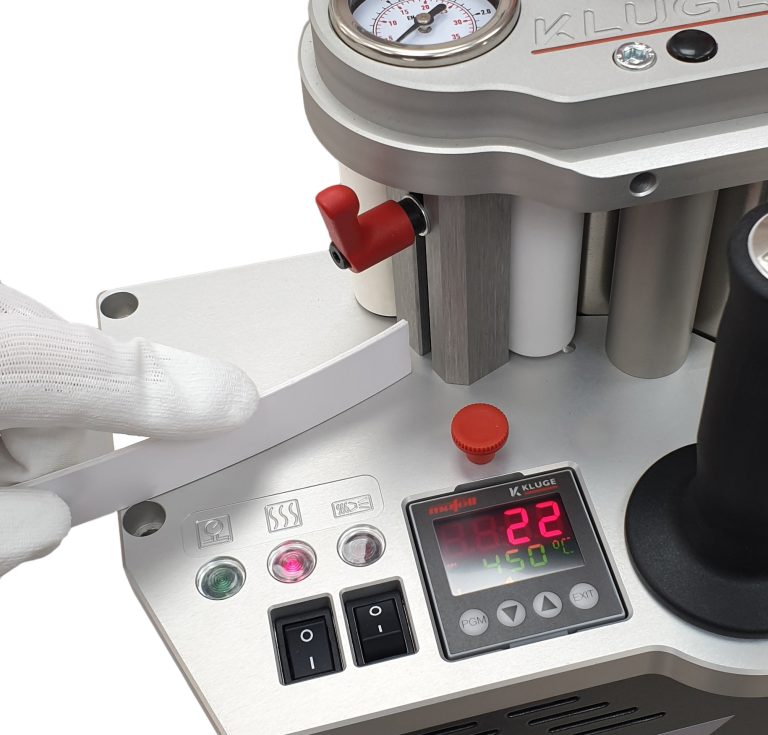
The HIT-M activates the functional layer of compatible edging with controlled hot air. It can also process traditional EVA edges, giving workshops flexibility across both zero-joint and conventional production.
A true laser edgebander activates the functional layer with laser energy. The HIT-M uses controlled hot air. Both approaches are designed to produce a visually clean zero-joint result on compatible edging material, but the technology used to activate that layer is different.
The specifications below relate to the HIT-M hot-air zero-joint system. Confirm current configuration, edge compatibility and availability with Tuckwell Machinery before ordering.
| Detail | HIT-M |
|---|---|
| Technology | Hot-air injection for activating functional layers on compatible edging |
| Edge compatibility | Functional-layer edging and traditional EVA edges |
| Component capability | Straight, bevelled, curved, round panels and moulded parts |
| Angle processing | Up to 55° |
| Maximum edge height | 65 mm |
| Feed rate | 1–5.5 m/min, infinitely variable |
| Hot-air system | Up to 520°C with controlled temperature |
| Pressure system | 2 motor-driven rollers plus 1 swivel 90° driven roller for internal bonding |
| Automatic operation | Edge feeder with detection and stop function |
| Smart functionality | Automatic heat on lift, standby when placed down, heat-up time under 30 seconds |
| Power | 230V AC, 3.05 kW, 13.3 A |
| Air requirement | 6–10 bar |
| Additional use | CNC capable and compatible with corner-table setups |
| Manufacturing | Made in Germany |
Both technologies can create a premium edge with a very small or visually absent bond line. The key difference is how the functional layer on the edging is activated.
For manufacturers producing premium cabinetry, kitchens, furniture and commercial joinery, edge quality can have a major impact on the finished appearance of the product.
The functional layer is activated directly, helping minimise the visible bond line between board and edging.
Particularly relevant to kitchens, high-end cabinetry and furniture where finished edge quality is highly visible.
Compatible systems can deliver repeatable activation and bonding when correctly matched to the edging material and workflow.
Tuckwell can help you compare true laser systems with compact hot-air zero-joint alternatives for your production requirements.
See how the HIT-M uses controlled hot air to activate compatible functional-layer edging in a compact workshop format.
If you are comparing a laser edgebander with a compact hot-air solution, talk to Tuckwell about your panel types, edge materials, production volume and finish requirements.
The right zero-joint solution depends on your production volume, edge material, component shapes and the level of automation you need.
Tell us the finish you are trying to achieve, the edging you use and your production requirements. We can help you compare laser and hot-air zero-joint options.
Answers to common questions about laser edgebander technology, zero-joint edging and compact hot-air alternatives.
A laser edgebander uses laser energy to activate the functional layer on compatible edging material. This allows the edging to bond directly to the panel edge and helps create a premium zero-joint appearance with little to no visible glue line.
The main benefit is the clean finished appearance. By activating a functional layer instead of relying on a conventional visible glue line, the edge can appear more seamless on premium cabinetry, furniture and joinery.
No. The HIT-M uses controlled hot air rather than laser energy. It activates compatible functional-layer edging to create a similar optical zero-joint finish in a compact workshop format.
A laser edgebander uses laser energy to activate the edging's functional layer. The HIT-M uses controlled heated air. Both can produce a visually clean zero-joint result on compatible edging, but the activation technology is different.
The supplied HIT-M information states that it can process compatible functional-layer edging as well as traditional EVA edges.
Yes. The HIT-M is suitable for straight, bevelled, curved, round panels and moulded parts, with angle processing up to 55°.
Yes. Tuckwell Machinery can help Australian woodworking businesses compare laser edgebander technology with compact hot-air zero-joint alternatives and can assist with machine selection, installation, operator training and ongoing support.
Explore complementary machinery for edge finishing, panel handling, CNC machining, drilling, timber processing and complete woodworking production workflows.